Bajaj Freedom 125 CNG
Bike · Published 27 September 2025 · Updated 19 July 2026
Written by Vivaan Kapoor, Bikes Editor
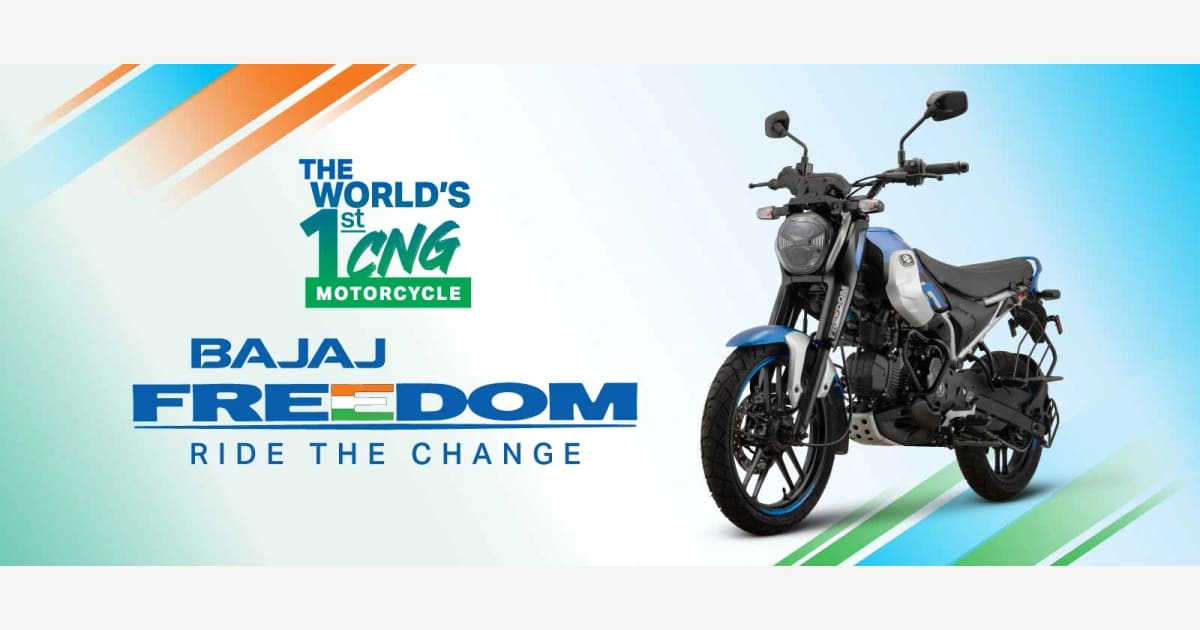
Every fuel-price hike sends Indian commuters searching for alternatives, and Bajaj's answer wasn't an incremental mileage tweak — it was the world's first motorcycle built from the ground up to run on CNG. If you've ever calculated what fuel costs eat out of your monthly budget, this bike's entire pitch is built around that number. Here's the full breakdown, including where the economics genuinely work and where they don't.
Key Specifications
Why This Bike Exists at All
Every time fuel prices spike, the same conversation happens across Indian commuter forums: is there a way around this? For four-wheelers, CNG has been a mainstream answer for years — auto-rickshaws and taxis switched en masse. Two-wheelers never got the same factory-backed treatment, largely because packaging a CNG tank safely and efficiently into a motorcycle frame is a genuinely harder engineering problem than doing it in a car.
Bajaj's answer with the Freedom 125 was to design the frame around the CNG tank from the start, rather than retrofitting one onto an existing commuter platform. That's the difference between a proof-of-concept and a bike Bajaj is confident enough to sell at scale — and it's why this launch got attention well beyond the usual two-wheeler press.
The Actual Running-Cost Math
The core pitch is straightforward: CNG costs meaningfully less per unit of energy than petrol in most Indian cities, and that gap compounds fast for anyone riding daily. Commuters clocking meaningful monthly kilometres — delivery riders, long-commute office-goers — are exactly the buyers for whom this calculation matters most, and the higher upfront price of the bike is designed to be recovered through fuel savings over a realistic ownership period.
The catch is infrastructure: CNG filling stations remain concentrated in specific cities and corridors. Before buying, it's worth mapping CNG station density on your actual daily routes — the bike's dual-fuel design means you're never stranded, but the economic case weakens fast if you're frequently forced back onto the petrol reserve.
Price in India
The Freedom 125 is priced higher than a comparable petrol-only 125cc commuter at purchase, but is designed to recover that gap through lower running costs over time. Check Bajaj's official configurator for the current on-road price in your city.
Our Take
If you ride enough kilometres that fuel cost is a genuine monthly concern, the Freedom 125's dual-fuel math can make real financial sense — just factor in CNG station availability on your actual daily routes before buying, since that's the one variable outside the bike's control.
Frequently Asked Questions
Can the Bajaj Freedom 125 run on petrol if CNG isn't available?
Yes, it includes a small petrol reserve tank specifically so you're not stranded in areas without CNG filling infrastructure.
Is CNG actually cheaper per kilometre than petrol for this bike?
Yes — CNG is generally priced significantly lower per unit of energy than petrol in India, which is the entire economic rationale behind this bike's existence.
How long does it take to recover the higher purchase price through fuel savings?
This depends heavily on your monthly riding distance and local CNG/petrol price gap — high-mileage riders (delivery riders, long commuters) recover the premium fastest.
Is CNG safe to use on a motorcycle?
Bajaj designed the Freedom 125's frame specifically to house the CNG tank safely from the ground up, rather than retrofitting one onto an existing platform — this integrated approach is a key part of its engineering pitch.