Why Foldable Phones Are Finally Having Their Moment in India
Analysis · Published 19 July 2026 · Updated 19 July 2026
Written by Rohan Mehta, Mobile Editor
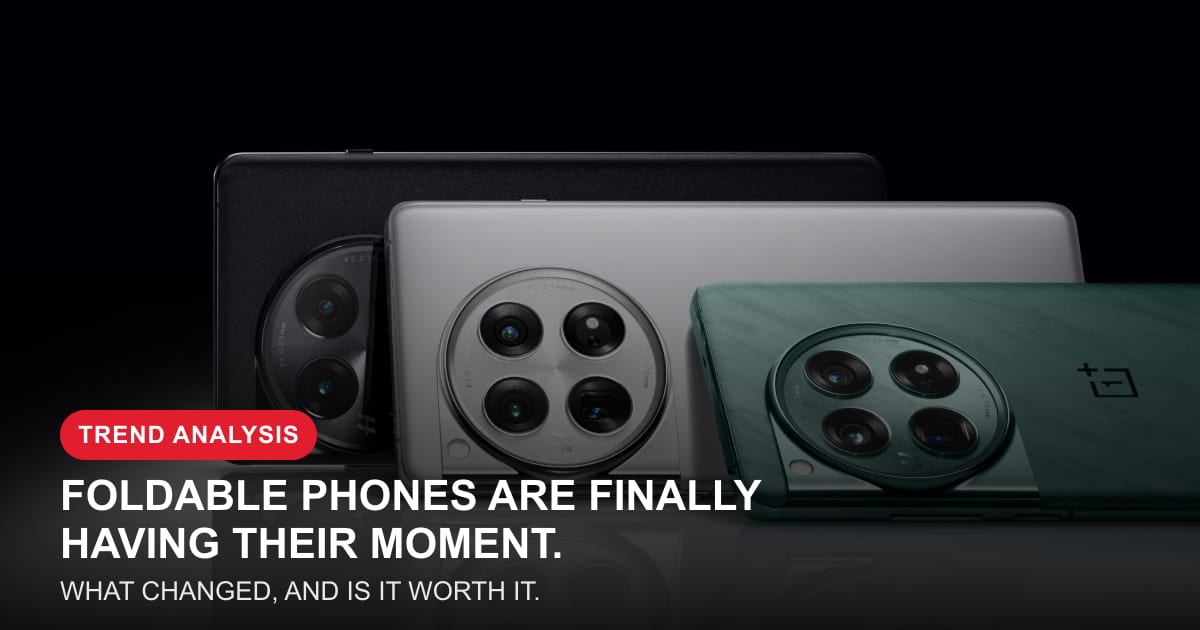
For years, foldable phones were the flagship demo unit nobody actually bought — impressive in a store, hard to justify at checkout. That's shifting, with rumour cycles around devices like the Galaxy Z Fold 8 now generating genuine buyer interest rather than just tech-press curiosity. Here's what actually changed.
Quick Answer
Foldable phones are gaining real traction because successive hardware generations fixed the three biggest complaints — visible screen crease, hinge durability, and unfolded thickness — while software from Samsung and Google matured enough to make the larger folding screen genuinely useful for multitasking, not just a novelty.
The Hardware Problems Actually Got Fixed
Early foldables shipped with hinges that visibly wore down, screens with creases you could feel under your thumb, and folded profiles thick enough to barely fit in a normal pocket. Multiple hardware generations later, hinge mechanisms use more durable materials engineered specifically for hundreds of thousands of fold cycles, and folding glass technology has advanced enough that the crease, while not invisible, is far less intrusive than it was at launch.
Software Finally Caught Up to the Hardware
A folding screen is only as useful as the software that takes advantage of it, and this was arguably the slower-moving problem. Multi-window multitasking, app continuity between folded and unfolded states, and app developers actually optimising layouts for a square-ish unfolded aspect ratio all took years to mature — and that maturity is a bigger factor in current foldable appeal than any single hardware spec.
Is It Actually Worth Buying One Now?
The honest answer depends entirely on whether you'll use the unfolded screen for something specific — split-screen document work, reading, or content creation — rather than buying it purely for the novelty. If you can't articulate a concrete use case for the larger screen beyond "it looks cool," a traditional flagship will generally give you more value per rupee spent.
Frequently Asked Questions
Are foldable phones durable enough for daily use now?
Durability has improved significantly with reinforced hinges and tougher folding glass, though foldables still generally carry more long-term wear risk than a traditional slab phone.
Why were foldable phones considered a gimmick before?
Early foldables suffered from visible creases, hinge durability concerns, thick unfolded profiles and prices that felt disproportionate to the practical benefit — issues that newer generations have meaningfully addressed.
Is a foldable phone worth it over a flagship slab phone?
It depends on whether you genuinely use the larger unfolded screen for productivity or multitasking — if not, a traditional flagship usually offers better value for the same money.